CS2 Skins Guide for Beginners
CS2 skins change how your weapons, knives and gloves look. They don’t change how the game plays, but a lot of them are worth real money. Some cost a few cents, others cost thousands. I started out buying skins just because I liked them, and later ended up doing around 200 trade ups, so I have bought and sold quite a lot of them by now.
This page explains the basics: what the terms mean, why one skin costs more than another, where to get skins and how to sell them again. If you are new to CS2 skins, just read it from the top.
What are CS2 skins?
A skin is a cosmetic for a weapon, a knife, a pair of gloves or an agent. You get them from weekly drops, cases, the Steam market, other players or from trade ups. You can sell them for Steam Wallet money or on other marketplaces, which is why people see them as more than just decoration.
Rarity
Every skin has a rarity. It decides how often the skin drops from a case, and it has a big effect on the price.
- Consumer Grade (white): the cheapest skins, often just a few cents.
- Industrial Grade (light blue): also cheap.
- Mil-Spec (blue): from cheap to a few tens of dollars.
- Restricted (purple): more expensive.
- Classified (pink): expensive.
- Covert (red): the highest tier for normal weapon skins.
- Exceedingly Rare (gold): knives and gloves.
- Contraband (orange): only the M4A4 Howl, which was removed from cases a long time ago.
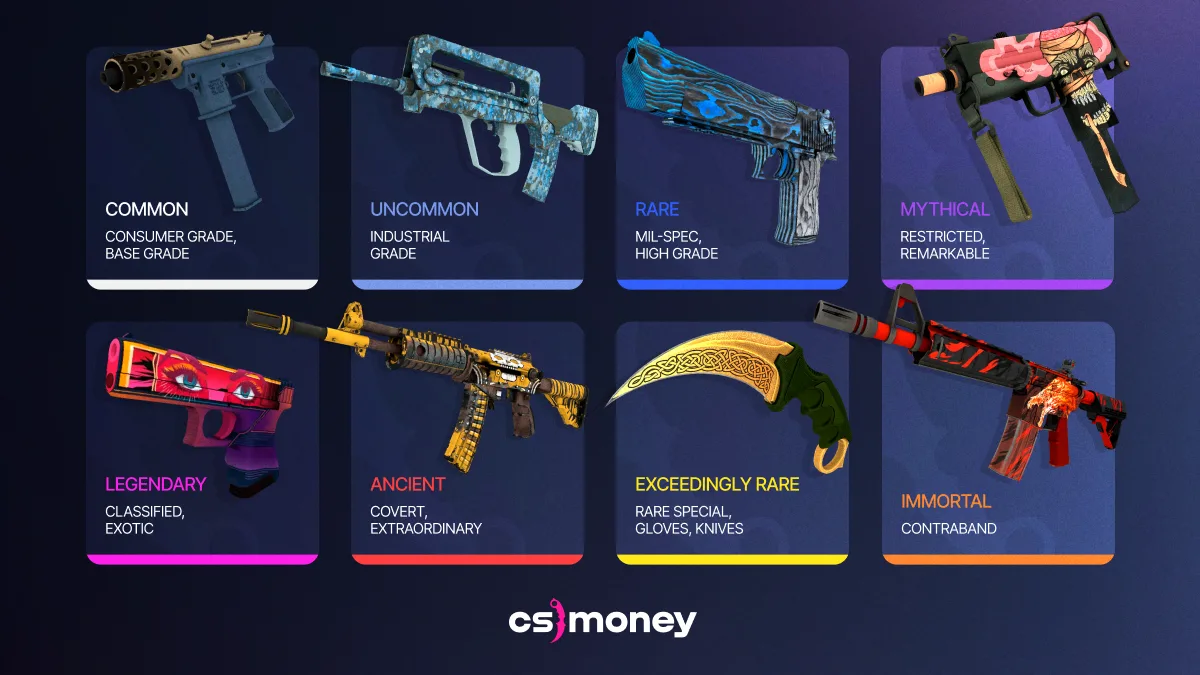
A higher rarity does not always mean a higher price. An AK-47 skin often sells for more than a skin of the same rarity on a weapon nobody uses. If you are new, start with cheap skins. You can go up in rarity later with trade ups.
Float and wear
Every skin has a float, a number between 0 and 1 that says how worn it is. Low float means a clean skin, high float means a scratched one. The wear name comes from the float:
| Wear | Float range |
|---|---|
| Factory New | 0.00 – 0.07 |
| Minimal Wear | 0.07 – 0.15 |
| Field-Tested | 0.15 – 0.38 |
| Well-Worn | 0.38 – 0.45 |
| Battle-Scarred | 0.45 – 1.00 |
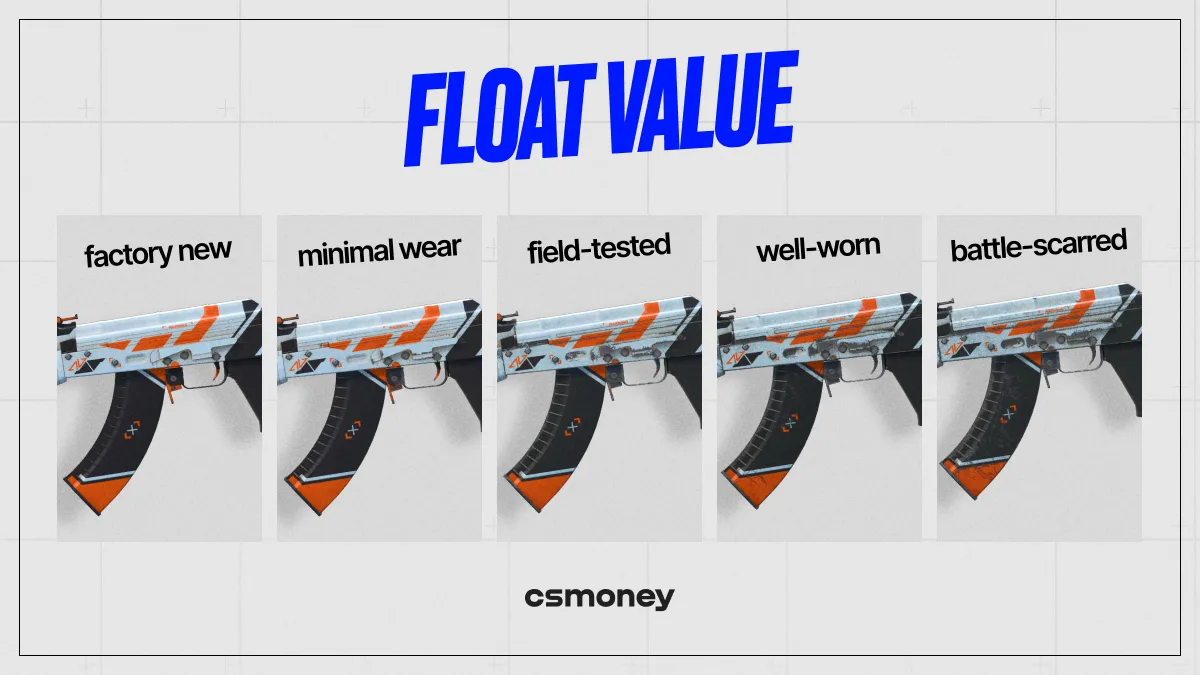
Two Factory New skins can still look different. One with a float of 0.01 is a lot cleaner than one with 0.06, and the low one usually costs more. Always look at the exact float before you buy. For trade ups it matters even more, since the float of the skin you get comes from the floats you put in. I wrote about that in my trade up guide.
Patterns
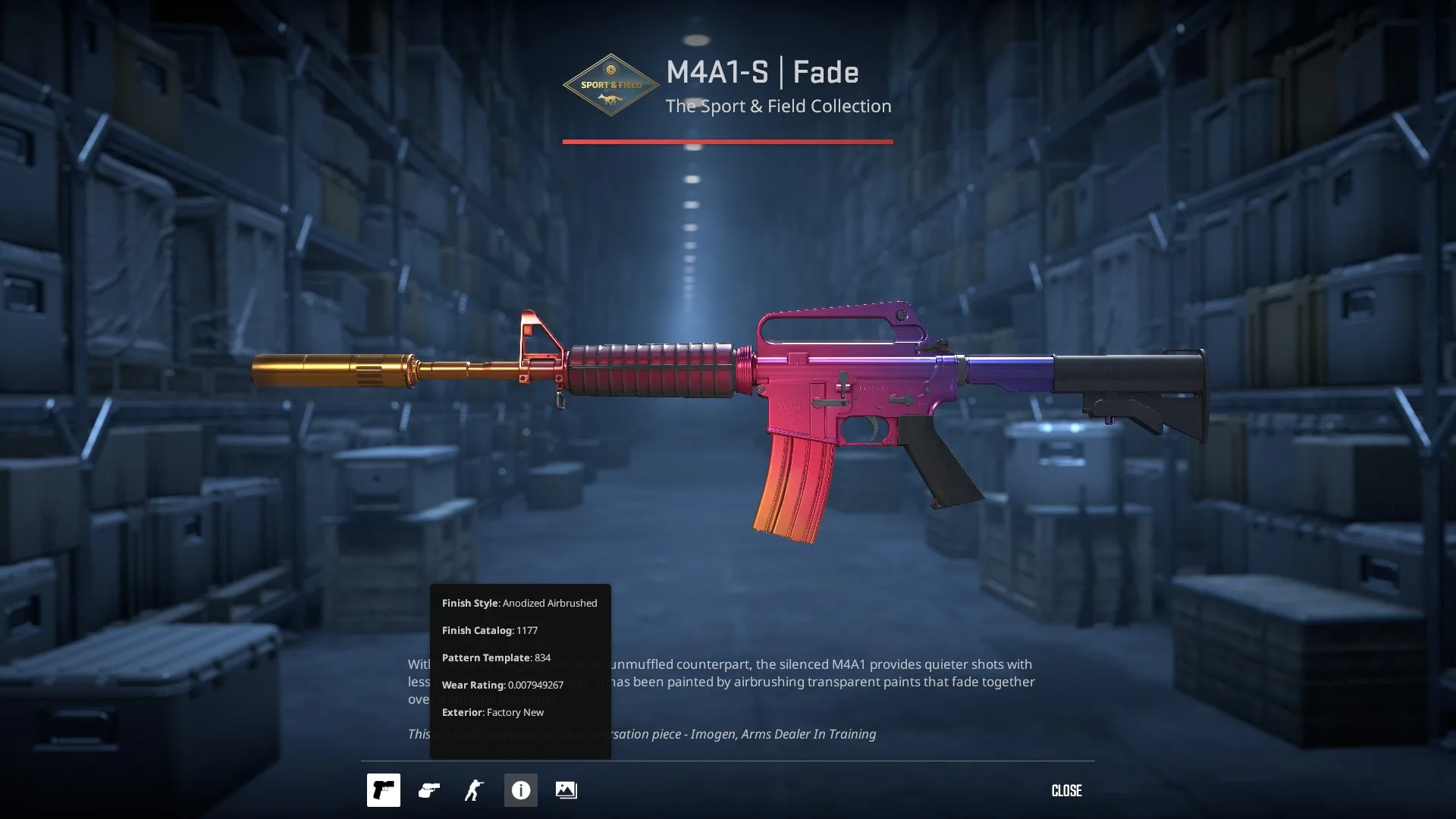
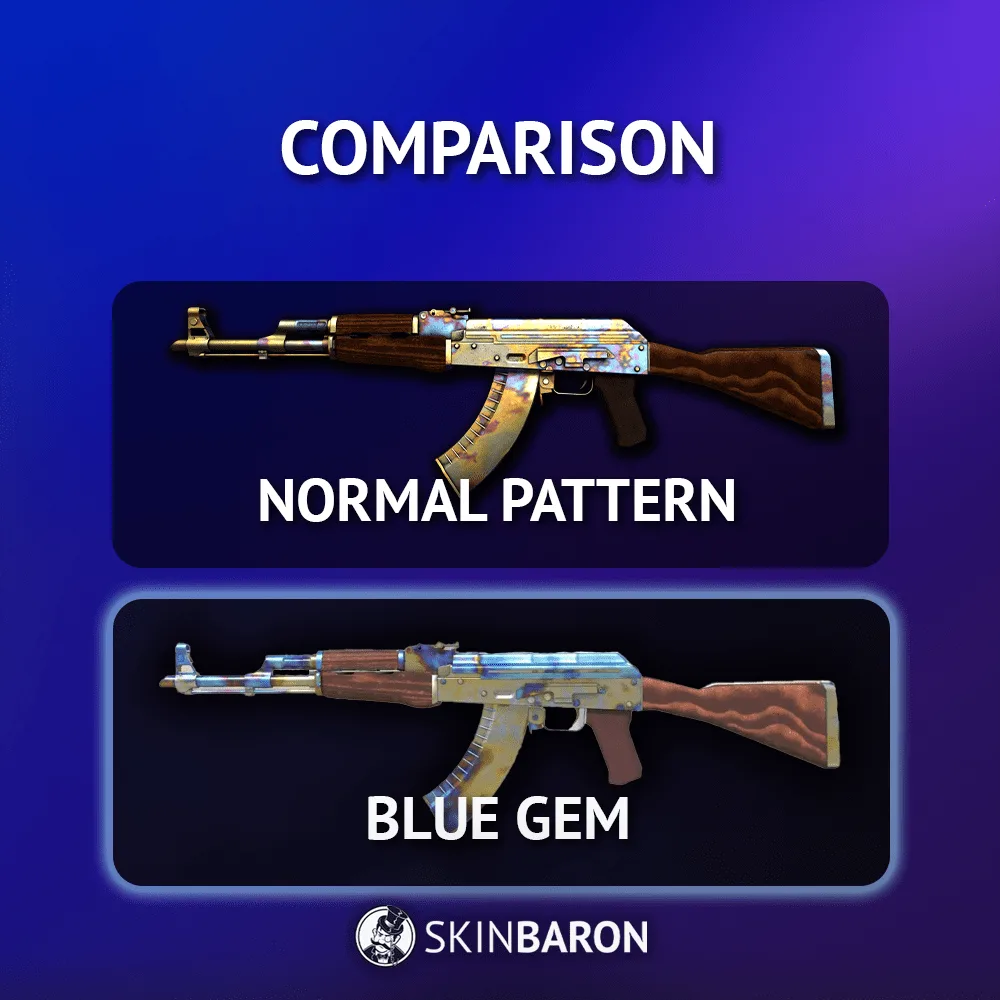
Some skins, like Case Hardened and Fade, have a pattern seed. Every skin of that type looks a bit different, and some patterns are worth a lot more than others. A Case Hardened with a lot of blue can sell for thousands more than the same skin with a boring pattern.
If you unbox one of these, check the pattern before you sell it. Selling a skin and finding out later that it was worth way more is a bad feeling.
StatTrak™ and Souvenir
StatTrak™ skins have a counter that counts your kills with that weapon, only in matches against real players. About 1 in 10 drops is a StatTrak™ version, and they usually sell for more than the normal skin.
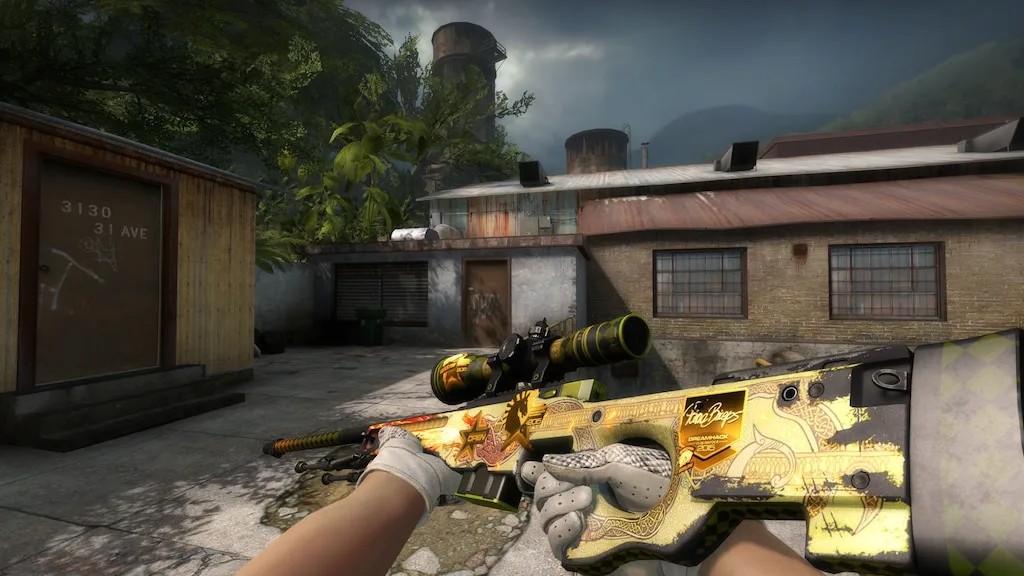
Souvenir skins drop while watching a Major and have stickers from the teams and players of that match. Most of them are not worth much more than the normal skin, but the ones with famous autographs can get very expensive.
What makes a CS2 skin expensive?
There is no single answer, it is a mix of things.
- Rarity: harder to get means more expensive, most of the time.
- The weapon: AK-47, AWP and knives sell better than skins for weapons people don’t use.
- Float: a low float in Factory New is worth more than a high one.
- Pattern: matters a lot for Case Hardened and Fade.
- StatTrak™: usually worth more than the normal one.
- Stickers: some stickers add a lot of value, most add almost nothing.
- Supply and demand: skins from collections that are no longer in cases get rarer over time, and a skin that gets popular can jump in price quickly.
That is why two skins that look almost the same can have very different prices. Compare a skin with the same skin in the same wear before you buy it.
How to get CS2 skins
Weekly drop
You can get one free skin per week by earning XP in matches. How much XP you need and how fast you earn it depends on the game mode, and Valve changes this from time to time, so check in the game what the rules are right now. Don’t expect much from it. It is free, but it is usually a cheap skin.
Opening cases
You need a case and a key. The key costs about $2.50, so every opening costs you more than the case itself. These are the odds for a normal weapon case:
| Rarity | Chance |
|---|---|
| Mil-Spec (blue) | 79.92% |
| Restricted (purple) | 15.98% |
| Classified (pink) | 3.20% |
| Covert (red) | 0.64% |
| Exceedingly Rare (gold) | 0.26% |
Most of the time you get a Mil-Spec skin that is worth less than the key you just paid for. If you like opening cases, go ahead, but count it as money spent on fun. If you want a specific skin or want to make money, buying the skin directly or doing trade ups makes more sense.
Steam Community Market
This is where most people start. You pay with your Steam Wallet and the market handles the trade, so you can’t get scammed by the seller. Prices change all the time, and new collections or popular skins can spike. When you sell, Steam keeps about 13%, and money in your Steam Wallet can’t be taken out, so it stays in Steam. Other marketplaces like Skinport are often cheaper, but check the site first.
Trade ups
You can trade 10 skins of one rarity for 1 skin of the next rarity. Most trade ups lose money, but some are profitable if the floats and prices are right. I did the nothing to knife trade up challenge this way and made around 500 dollars of profit from it. My trade up calculator shows the profitable trade ups every day, and the trade up guide explains how they work.
How to check a skin before you buy
Look at the float first. You can inspect a skin in the game or use a tool like CSFloat. A Factory New skin with a float of 0.069 is not the same as one with 0.01, even if the price is the same.
If the skin has a pattern, check the pattern. If it has stickers, check if those stickers are actually worth something, because sellers sometimes ask a lot extra for stickers that aren’t. Then compare the price with the Steam market and one other marketplace. And if you buy outside of Steam, look at who you are buying from.
How to sell CS2 skins
The easiest way is the Steam Community Market. You list the skin, and when it sells the money goes to your Steam Wallet, minus the fee of about 13%. The downside is that you can’t withdraw it.
If you want real money, you need a third party marketplace like Skinport or Buff.163. The fees are often lower than on Steam, but every site has its own rules, payout methods and fees, so read those before you list anything. Stick to well known sites, and never give your login details to anyone.
A few things I would keep in mind:
- A skin you just bought or traded for can have a 7 day trade hold, so you can’t sell it right away.
- Prices can change a lot in a week, so look at the current price before you list.
- Selling a bit under the cheapest listing sells faster, but you lose some money. If you are not in a hurry, wait.
- If you unboxed something with a special pattern or good stickers, look up what it is worth first.
Frequently asked questions
Are CS2 skins worth money?
Yes, a lot of skins can be sold for real money. Most skins are worth very little though, and only a small part of them is worth a lot. Prices also go up and down, so don’t spend money you can’t afford to lose.
What is the cheapest way to get CS2 skins?
The weekly drop is free, but it is only one skin and usually a cheap one. Apart from that, buying the exact skin you want is almost always cheaper than opening cases.
What is a float in CS2?
A number between 0 and 1 that shows how worn a skin is. Lower is cleaner. It decides if a skin is Factory New, Minimal Wear, Field-Tested, Well-Worn or Battle-Scarred.
Can you make money with CS2 skins?
It is possible, but it takes time and most people lose money. Buying and selling at the right moment and doing profitable trade ups are the main ways. If you want to try, the trade up calculator shows what is profitable today.
Is it safe to buy and sell CS2 skins?
The Steam Community Market is the safest. On other sites, use well known ones and read reviews first. Turn on Steam Guard and trade confirmations, and be careful with trade offers from people you don’t know.